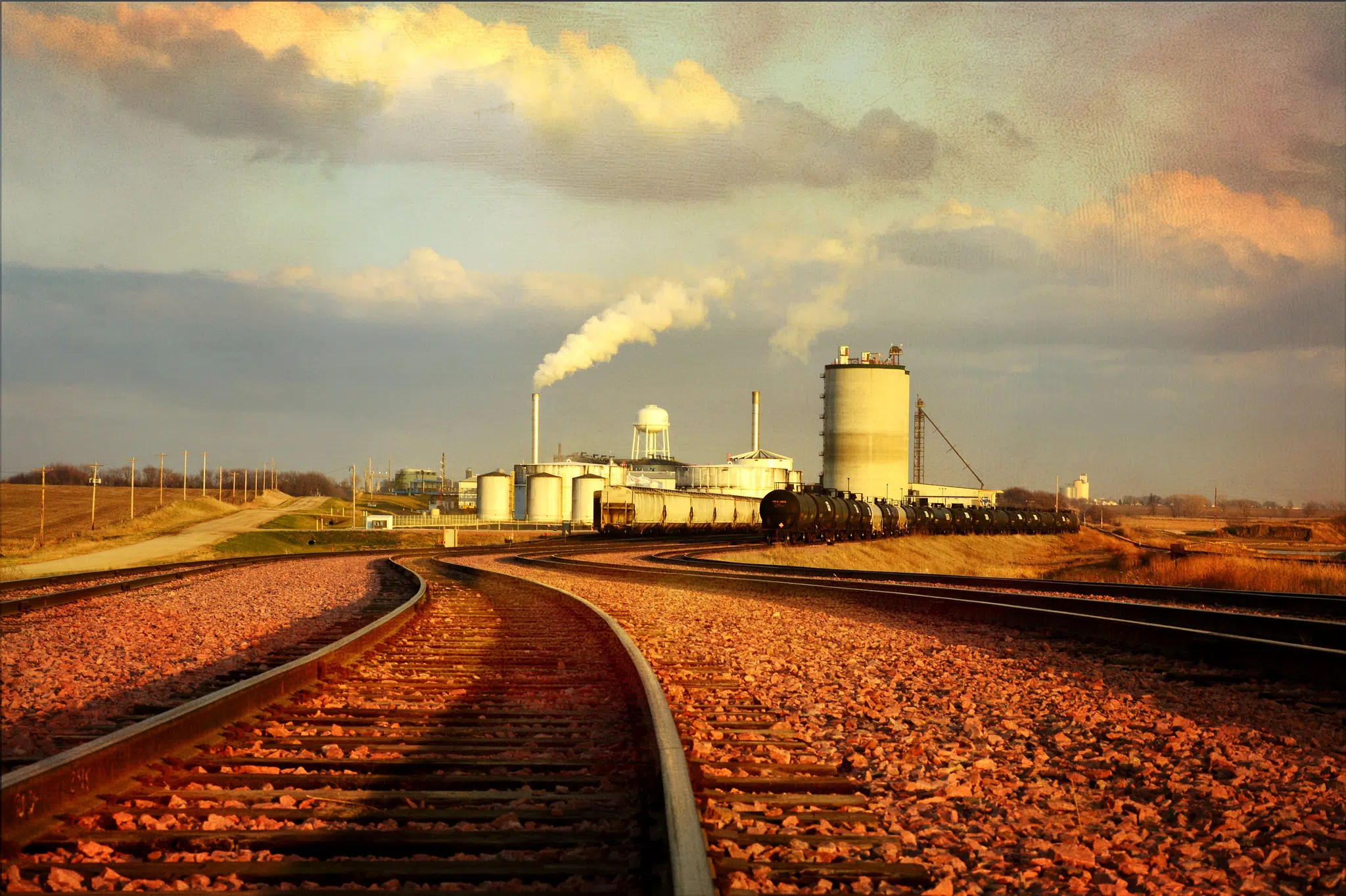
If you ask an Environment Canada media spokesperson about contamination resulting from tar sands operations, they will not tell you the federal government has failed to adequately monitor the mega-project's effects on water.
They most certainly will not say outright that the federal government has failed to monitor the long term or cumulative environmental effects of the world's largest industrial project. They won't say it, but not because it isn't the case.
The tar sands are contaminating hundreds of kilometres of land in northern Alberta with cancer-causing contaminants and neurotoxins.
And although federal scientists have confirmed this, they are prevented from sharing information about their research with the media.
In fact, if a journalist wants to approach a public servant scientist these days, he or she is required to follow the federal ministry's media relations protocol, one which strictly limits the media's access to scientists, sees scientists media trained by communications professionals who coach them on their answers, determine beforehand which questions can be asked or answered, and monitor the interaction to ensure federal employees stay within the preordained parameters.
The result is an overly-monitored process that causes burdensome delays in media-scientist interactions. The overwhelming consequence is that the media has stopped talking to the country's national scientists.
But University of Alberta scientist Dr. David Schindler is ready and willing to pick up the slack, especially after Environment Canada federal scientists recently presented findings that vindicated years of Schindler's contentious research exposing the negative effects of tar sands production on local waterways and aquatic species.
According to Schindler, the rapid expansion of the tar sands is not based on valid science: "Both background studies and environmental impact assessments have been shoddy, and could not really even be called science. This must change," he told DeSmog.
Today the Athabasca Chipewyan First Nation (ACFN) will argue in the Alberta Court of Appeal that Shell Canada’s proposed Jackpine Mine expansion is in violation of their Constitutional rights and represents a failure on behalf of the federal government to uphold their legal duty to consult (DTC). The First Nation, which originally made this argument in a joint federal/provincial hearing on October 1, was told the panel did not have jurisdiction to hear constitutional questions.
When the ACFN applied for an adjournment, in that case, their request was denied. In response the First Nation is claiming they have “no other option but to file legal arguments for the protection of their constitutionally protected rights through the Alberta Court of Appeal.”
The government’s refusal to consider the ACFN’s best defense against the megaproject, which will increase Shell’s tar sands bitumen mining capacity in this one project alone by 100,000 barrels per day, appears out of step with the federal government’s own admission that they must accommodate the rights of First Nations when considering industrial projects that entail irreversible impacts.
First Nations rights, especially as defined in the 1982 Constitution and subsequent court decisions, must be accommodated, according to an internal federal discussion paper, released to Greenpeace Canada’s climate and energy campaigner Keith Stewart through access to information legislation.
Today the Athabasca Chipewyan First Nation (ACFN) is arguing that Shell Canada's proposed expansion of the Jackpine Mine in the tar sands is in violation of constitutionally protected aboriginal rights outlined in Section 35 of the Canadian Constitution and Treaty 8, which the ACFN signed in 1899. Arguments against the proposal will be heard by a provincial-federal Joint Review Panel.
The ACFN participated in a Fort McMurray rally today, asking for individuals, organizations and communities across Canada to stand in solidarity with their tribe.
"We are here today because a legal challenge may be the only remaining piece of law that can stop the destruction of our land," said Allan Adam, chief of the ACFN. "We are thankful for the mountain of support we've been receiving. People understand the significance of this challenge and what we must do for our land."
The proposed expansion will increase Jackpine Mine's production capacity from 200,000 barrels per day (bbl/d) to 300,000 bbl/d and will extend the mine's lifespan to 2049.
The project will add 1.8 million tonnes of greenhouse gasses into the atmosphere, roughly the equivalent of 280,000 additional cars on the road. The waste from the expanded project will amount to some 486 billion litres of liquid tailings including mercury, arsenic and lead, which Shell proposes to permanently bury in what is called a 'pit lake,' according to a press release.
The next time I gas up my car, I will have a lot to think about after watching the new documentary film, Delta Boys, now available for digital download release starting today at Sundance and iTunes, and on DVD at Amazon.com.
The film chronicles the plight of the people of the Niger Delta in Nigeria, the fifth largest supplier of oil to the United States. Despite the wealth generated by this oil extraction, the majority of Niger Deltans live on less than a dollar a day and lack even basic public health and sanitation services.
The film brings to light the Niger Delta people’s ongoing struggles against multinational oil corporations and one of Africa’s most corrupt governments. While most of the revenue from oil development flows to the Nigerian government in the form of royalties, in the rural Delta villages where the drilling actually takes place, there are no water or sewage systems, no schools, no hospitals, no adequate roads, and no real job opportunities outside of joining one of the rebel militias.
Meet the Delta Boys – armed rebels who zoom around the Delta in high-speed motor boats, sabotaging oil infrastructure, blackmailing the oil companies, kidnapping workers, and tapping into their pipelines to feed a lucrative but dangerous black market in oil they claim is rightfully theirs.
In addition, greenhouse gas emissions from the project would total 2.36 megatons of CO2 equivalent each year - an increase of 5.2 per cent in tar sands emissions from 2009, or roughly 281,000 cars on the road. Since Shell proposed the expansion in 2007, 11 additional projects have been proposed in the tar sands region.
The outlook for caribou in Alberta is grim, especially as they find themselves in a stand off against industrial giants backed by a federal government in favor of increasing tar sands and other industrial activity. Habitat disruption is a crucial issue for caribou who need large buffered areas of old growth forest to survive. The majority of Alberta's 12 caribou herds currently struggle with low calf survival - an issue directly related to disturbed habitat.
Democracy is utterly dependent upon an electorate that is accurately informed. In promoting climate change denial (and often denying their responsibility for doing so) industry has done more than endanger the environment. It has undermined democracy.
There is a vast difference between putting forth a point of view, honestly held, and intentionally sowing the seeds of confusion. Free speech does not include the right to deceive. Deception is not a point of view. And the right to disagree does not include a right to intentionally subvert the public awareness.