Alberta

Thu, 2011-08-11 14:24Emma Pullman
Emma Pullman's picture

Permit to Pollute: Dodging New Law, Agency Approves Alberta Coal Plant

In Alberta, coal was first mined near Edmonton as early as 1850, and commercial coal operations took off in 1874. After the coal rush where hundreds of mines popped up across the province, the "black rock that burns" fell out of favour by the mid 1950s with the advent of natural gas.

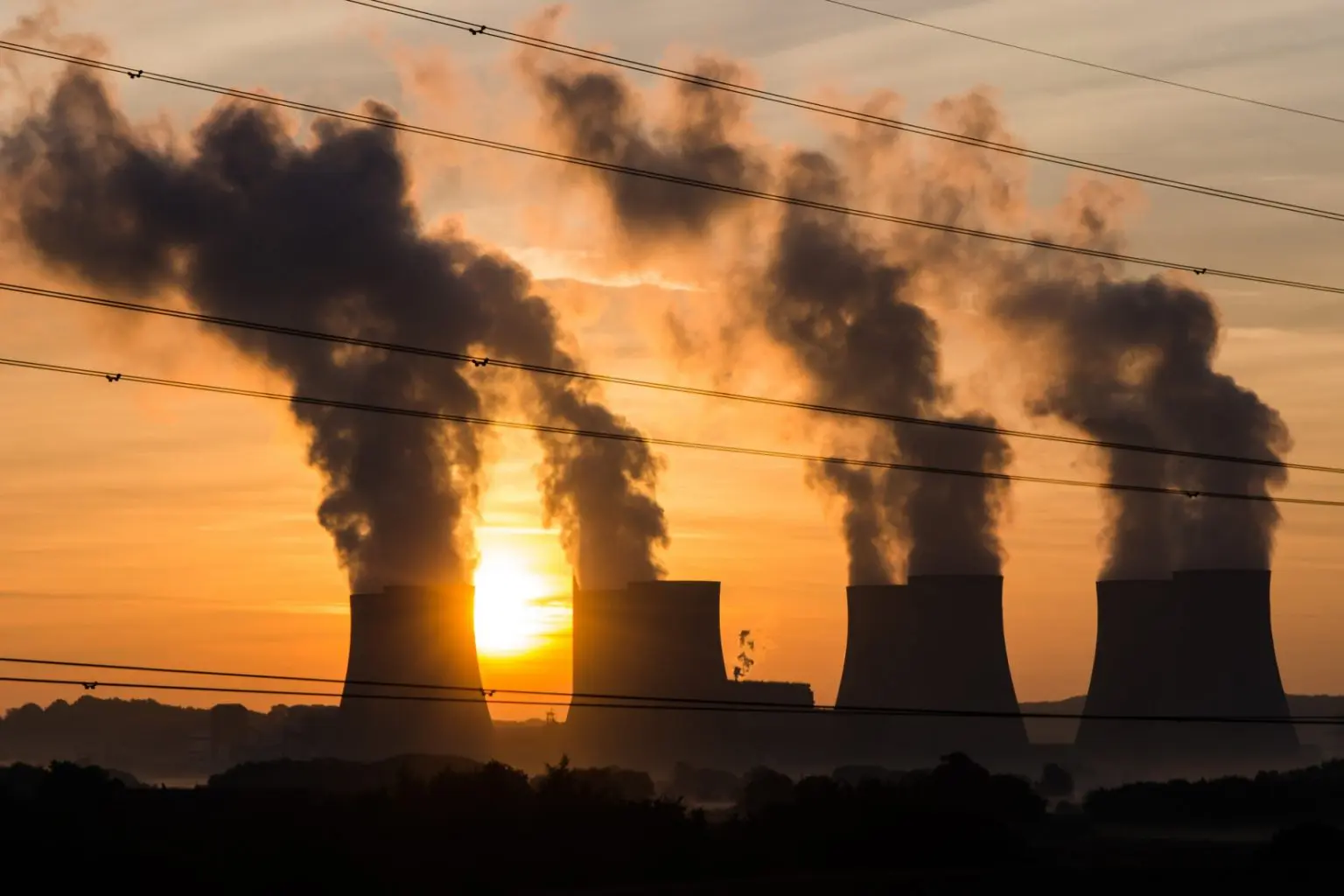
While no new coal plants have been approved in Alberta in over a decade, it seems history is repeating itself. On June 30th, the Alberta Utilities Commission (AUC) approved the Milner Expansion Project, a 500Mw coal-fired generating facility to be built west of Edmonton. The final decision by the AUC to approve the coal plant is a serious black eye for the AUC and its ability to protect the public interest.

The project gives Calgary-based Maxim Power Corp. license to produce some of the filthiest power on the planet for 45 years while emitting 3Mt per year of greenhouse gas emissions. Alberta's filthy tar sands are already the scourge of the planet, and this approval adds insult to injury.

Fri, 2011-07-29 12:14Ben Jervey
Ben Jervey's picture

The Many Problems With Tar Sands Pipelines

Enbridge tar sands pipeline spill Kalamazoo River Michigan

Note: This post is part of an ongoing series about North American pipelines. For an introduction and links to the wide-ranging coverage--from safety to legal issues to the business and economics to vulnerabilities--see this regularly-updated intro post.

On Monday, the House passed a bill that would force the Obama administration to make a final decision on TransCanada's controversial Keystone XL pipeline by November 1. The Keystone XL project (which regular DeSmogBlog readers should be familiar with) would funnel tar sands oil from Alberta's massive reserves down to Gulf Coast refineries in Texas.

This isn't the place to discuss in too much depth the various and plentiful problems with Alberta tar sands itself -- from extraction to transportation to refining to combustion, it's the dirtiest oil on the planet. From a climate perspective, the Alberta tar sands contain enough carbon to lock the planet into climate chaos. In the words of NASA climatologist Jim Hansen, "if the tar sands are thrown into the mix it is essentially game over."

Because Keystone XL is so controversial, and because its construction could be such a tipping point in the climate fight, a broad and diverse coalition of scientists and activists are digging in their heels for a big fight, and planning a multi-week action at the White House. (Here's more on how to get involved.)

But since this is a post about pipelines, I'm going to focus on how tar sands pipelines are different than those that carry conventional crude, how they're much more prone to leaks and spills, and how those spills are particularly bad for the environment.

Thu, 2011-06-02 16:15Farron Cousins
Farron Cousins's picture

UK Opposed to Europe’s Tar Sands Import Ban

While most European countries are working on a proposal that would effectively ban the use of Canadian tar sands in the European Union, the United Kingdom has made it clear that they will not support any measure to reduce their reliance on tar sands. Britain joins the Netherlands as one of only two countries that want to continue to have the option to use oil derived from Canadian tar sands.

The EU is working to produce a new “fuel directive” this year that would reduce the amount of emissions acceptable from fuels used for transportation. The directive would require a 6% reduction in the amount of emissions from vehicle fuel over the next 9 years. Because the emissions from tar sands run about 23% higher than those from traditional fossil fuels, this would mean that their use in the EU would be effectively prohibited.

Fri, 2011-05-13 07:45TJ Scolnick
TJ Scolnick's picture

A Less Dirty Energy Reliant Development Pathway In Alberta’s Future?

In July 2009, Alberta Premier Ed Stelmach created the Premier's Council for Economic Strategy. This 12-member council of various global experts was convened to provide guidance on how the province should maintain its prosperity through 2040. Earlier this month, after nearly two years of research, public meetings and private debate, the experts released their long-awaited scoping report, Shaping Alberta’s Future: Report of the Premier’s Council for Economic Strategy [pdf].

Together they sought to answer [pdf]: “What intentional choices should Albertans be making now to shape our future, the future of our grandchildren and the future of our province?”

According to council Chair David Emerson, a business executive and former federal cabinet minister, the council took a distinctive approach when evaluating Alberta’s future: “Our starting place was a strong conviction that “business-as-usual” is not an option for Alberta.”

Thu, 2011-05-12 12:37Emma Pullman
Emma Pullman's picture

Spill Baby Spill? The 5,000 Alberta Oil Spills Industry Would Prefer You Did Not Know About

Right now, the oil and gas industry is holding its breath as the approval of two major tar sands pipelines hang in the balance. The $13 billion Keystone XL pipeline would significantly increase the Canadian export of of dirty tar sands bitumen to the U.S. by as much as 510,000 barrels a day. And, on this side of the border, the ferociously debated $5.5 billion, 1,170 kilometre Enbridge Northern Gateway pipeline would carry dirty tar sands bitumen to Kitimat, B.C., where it would be loaded onto supertankers bound for growing energy markets in Asia. 

As the decisions near, a series of major oil spills in the last year have highlighted the dangers these two pipelines pose, particularly given the major expansion of tar sands production they would enable. 

This week, a pump-station equipment failure at a TransCanada pipeline caused 80,000 litres of oil to spill in North Dakota. The Keystone system has suffered 12 leaks since it opened last June, all of them related to equipment failures at pump stations. Despite the frequent spill record, the pipeline is due to resume operations on Saturday

Thu, 2011-03-31 04:45Matthew Carroll
Matthew Carroll's picture

European Union Pushing Back on Canada's Taxpayer Funded Tar Sands Lobbying

Canada Europe flags oiled

Canada does not - as yet - export much tar sands oil to Europe. So why, you might ask, have the Canadian and Alberta governments been working overtime using tax dollars to fund a massive misinformation and lobbying campaign on the other side of the Atlantic?

There's a clue in this press release from January announcing Alberta Energy Minister Ron Liepert's $40,000 lobbying jaunts to the US and Europe: "The European Union is not currently a major market for Alberta’s oil sands products, but any legislation or tariffs adopted by the union’s government can serve as a model for individual nations around the world. We want to continue to share our story with the legislators so they have the facts about our clean energy strategies"

(I'll let the "clean energy strategies" rubbish slide for now.)

It's not about protecting existing markets. At the moment the vast majority of exported tar sands oil goes to the US. For the most part, it's not even about securing a regulatory environment in Europe that protects future potential markets (although that is no doubt a contributing factor). I'll tell you why the Canadian and Albertan governments are so worried that they've been applying pressure on European legislators to a degree at least one EU parliamentarian has declared "unacceptable".

It's about precedent. And they're scared.

Sat, 2011-02-19 15:44TJ Scolnick
TJ Scolnick's picture

New Report: Keystone XL Pipeline Is Not Safe

TransCanada Corporation is facing another key hurdle in its efforts to obtain State Department approval for its proposed Keystone XL pipeline to deliver dirty tar sands oil from Northern Alberta to Texas refineries in the Gulf of Mexico.

On Friday, the Natural Resources Defense Council (NRDC), the Pipeline Safety Trust, the National Wildlife Federation and the Sierra Club jointly published a new report [pdf] which details the likelihood that there will be leaks and major oil spills into waterways along the pipeline's path.

The report explicitly states how tar sands oil is more corrosive than conventional oil and therefore is a much higher risk to pipeline systems.

Mon, 2011-02-14 11:38TJ Scolnick
TJ Scolnick's picture

The Facts Are In, The Tar Sands Are Dirty, But Industry Spin Campaign Continues

Last year, as part of its review of the TransCanada Keystone XL pipeline planned to deliver dirty tar sands oil from Alberta to refineries in the Gulf of Mexico, the Environmental Protection Agency (EPA) found that the carbon emissions from Canadian oil sands crude would be approximately 82% greater than average US crude.
 
Tar sands oil producers, fossil fuel advocates and Canadian and Alberta politicians were understandably worried about the reputation of their dirty oil. To battle these new facts, these groups have actively engaged in a campaign to greenwash the tar sands by promoting it as "ethical oil".  They've even commissioned their own report by the Cambridge Energy Research Associates suggesting that emissions from tar sands oil were only 5-15% higher than traditional oil products. 

Mon, 2011-01-17 13:58Emma Pullman
Emma Pullman's picture

Why We Need to Stop Calling Tar Sands Oil "Ethical Oil"

There are few terms in the Canadian vernacular that irk me more than "ethical oil".  Since Ezra Levant's 2010 book "Ethical Oil" hit the scene, it's become the favourite language for government newspeak, and the media.  Worst of all, its given tar sands proponents and the Conservative Government fodder for their debunked argument that tarsands oil is good for us

Levant's book looks at the ethical cost of our addiction to oil, and argues that Alberta tar sands oil is more ethically responsible than oil imported from despotic regimes in the Sudan, Russia, and Mexico, where human rights issues are of concern. 

Though neither Harper nor our new Minister of Environmental Destruction have read the book, the term was exactly what the Conservatives needed to bolster the much-maligned tar sands.  Prior to the echochamber that ensued after the publication of Levant's book,  tar sands oil was often characterized as "dirty" and "controversial" - much to the ire of the government.

 Levant may well have learned the art of spin early in his career while spending the summer in an internship arranged by the libertarian and clean energy/climate change enemy Charles G. Koch Foundation, or through his work with the Fraser Institute.  Levant himself coined the term "ethical oil" in 2009 after being involved in a panel on tar sands oil.  The spin doctor finished the 90-minute debate having not managed to convince his audience of the merits of the toxic oil.  Without admitting defeat, Levant quickly realized that he was going to have to find a different way to spin the dirty oil apart from economic arguments which just weren't resonating with people. 

Wed, 2011-01-12 23:17Emma Pullman
Emma Pullman's picture

State Department Refuses to Release Information on Tar Sands Oil Pipeline

The U.S. State Department notified a coalition of environmental groups last week that it has denied their Freedom of Information Act (FOIA) request for correspondence between the agency and a former presidential campaign staffer of Hillary Clinton’s, who, in his new role as oil industry lobbyist, is seeking Secretary of State Clinton’s approval for a tar sands oil pipeline.

The coalition, including Friends of the Earth, the Center for International Environmental Law, and Corporate Ethics International submitted a FOIA request in December targeted at Paul Elliott, now a lead lobbyist for TransCanada, the company aiming to build the controversial Keystone XL Pipeline that would bring 900,000 barrels a day of dirty tar sands over 2,000 miles through Montana, South Dakota, Nebraska, Kansas, Oklahoma and Texas, and a further 1,661 miles to refineries on the Gulf Coast.

The State Department denied the FOIA request on the grounds that the groups had not "reasonably described the records [they sought] in a way that someone familiar with Department records and programs could locate them" and cited the groups’ request for a waiver on the fees associated with the processing of the FOIA as reason to deny their request.

Marcie Keever, legal director for Friends of the Earth argues that the State Department did not have legitimate legal grounds to deny the FOIA request.

Pages

Subscribe to Alberta