hydraulic fracturing

Sat, 2011-07-30 09:21Carol Linnitt
Carol Linnitt's picture

Promises and Problems: EnergyNOW! Releases Special Video Report on Fracking in the Marcellus

Energy politics tend to have a socially galvanizing effect. In production zones, big industrial producers promise massive social incentives to locals who are forced to juggle the often conflicting concerns of environmental conservation and economic prosperity. What were once tight-knit societies are finding themselves divided over concerns for their land, water and air.

Nowhere is this narrative more harrowingly played out than in the rural towns of America, suddenly rich with an abundance of unconventional gas. Both a blessing and a curse, these communities are discovering what the gas drilling boom brings in its wake, beyond promises of wealth.

EnergyNOW! has produced a special video report, set within the drilling rigs of the Marcellus Shale, to see how fracking and unconventional gas production have affected the small town of Bradford County, Pennsylvania. Chief correspondent Tyler Suiters interviews residents, industry representatives, state officials, including former PA Environmental Secretary John Hangar, and independent experts, including Dr. Anthony Ingraffea, to tackle relevant issues from local economics to water contamination.

Thu, 2011-07-28 14:27Carol Linnitt
Carol Linnitt's picture

Frack Attack Music Video Warns of Gas Drilling Dangers in South Africa

The anti-frack movement just got a bit cooler thanks to Treasure the Karoo Action Group (TKAG). Today, the citizen-led environmental organization released a hip-hop music video designed to create awareness about the dangers of fracking in South Africa.

The animated music video is a part of TKAG’s larger campaign to prevent fracking in the Karoo region before an adequate scientific evaluation of the process has taken place. “Our drive against fracking has many elements – such as a legal challenge, a challenge to the regulating authority PASA, and community engagements. This music video will become a part of our strategy as we campaign against fracking in South Africa in general and in the Karoo in particular,” said group chairman Jonathan Deal in a press release.

The video features a young Cape Town artist, Jitsvinger, who uses a local dialect to describe social and environmental devastation caused by fracking. The accompanying images are of a young man, who moves through a gradually degraded landscape.

“We hope this video will help us spread the message about the potential risks involved with the use of fracking. If fracking is allowed to be implemented without careful research and planning, it is the entire country that will be directly or indirectly affected,” said Deal.

The lyrics, which TKAG provide an English translation of, describe the struggle of a resource rich region, targeted by industry “vultures.” Fracking “makes the whole ecosystem toxic” and brings “poison that spreads through the taps.” The message to the gas industry is clear: “take that failed technique and hit the road.”

As Deal explains, “we are talking to the youth because they are the ones who will be most affected by the potential social, economic and ecological damage caused through this mining technique.”

The South African government has imposed a temporary ban on fracking until further scientific study can take place. 


Thu, 2011-07-21 11:30Carol Linnitt
Carol Linnitt's picture

Shell Forced to Retract "Misleading" Fracking Adverts in South Africa

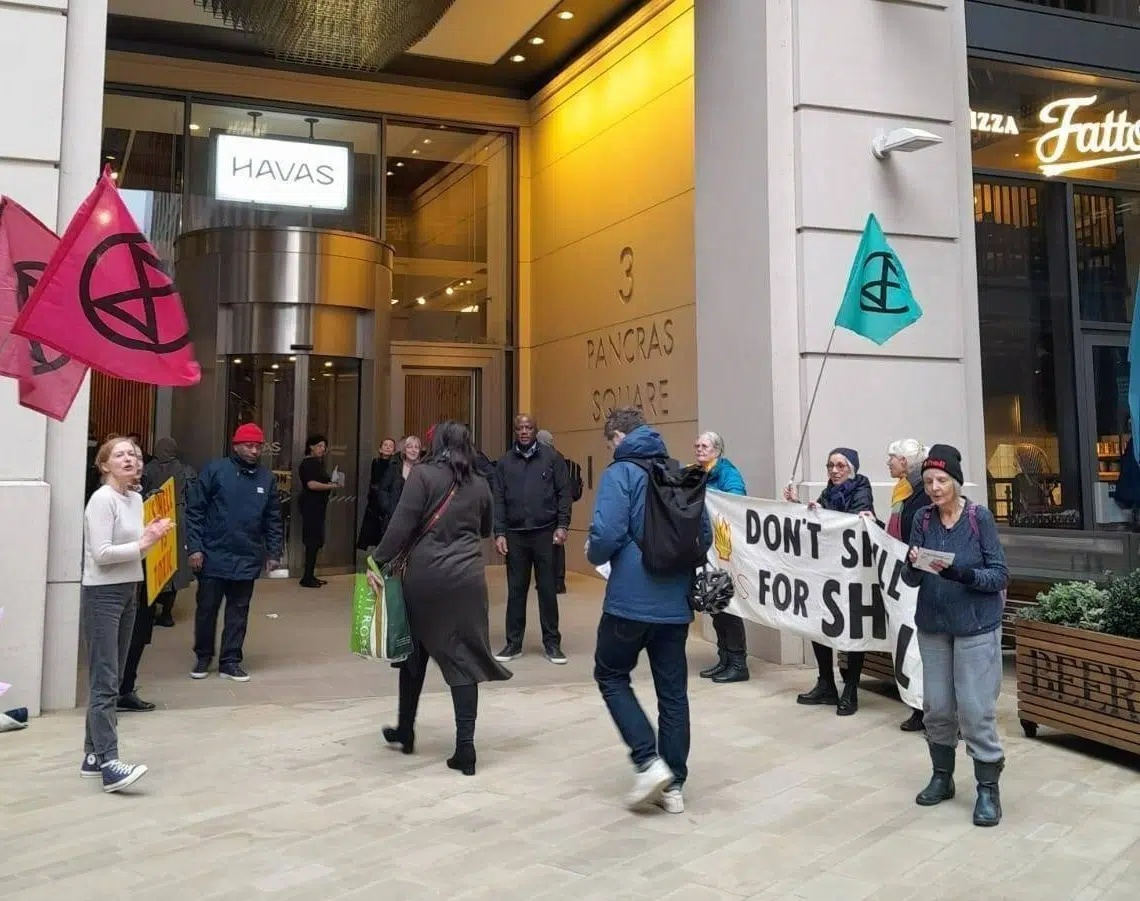
The gas industry has finally received the slap on the hand it deserves for parroting the outdated refrain: “there are no instances of documented water contamination from hydraulic fracturing.” In South Africa, the Advertising Standards Authority (ASA) ordered oil and gas giant Shell to withdraw claims about shale gas drilling, after the authority found the company guilty of propagating misleading information in several newspapers.

The Karoo region of South Africa has become an international target for unconventional gas producers since its vast shale gas deposits were discovered in recent years. The rush to drill created a wave of public concern, after reports of fracking disasters, including water contamination, well blow-outs and explosions, have become commonplace across America. The government has called for a delay in granting drilling permits until a full-scale study is completed to address mounting concerns.

Looking to sway public opinion, Shell published numerous full-page public relations adverts in local newspapers, claiming that hydraulic fracturing is used in 90% of gas wells and has never caused water contamination.

Sat, 2011-07-09 07:45TJ Scolnick
TJ Scolnick's picture

A Pan-European Approach To Banning Unconventional Gas?

A German member in the European parliament (MEP) is proposing a straightforward way to prevent (or outlaw) exploration and drilling for unconventional gas in the European Union (EU). His plan, bypass national strife and instead build consensus for a European-wide ban.

Jo Leinen, chair of the committee on the environment, public health and food safety, is considered one of the most influential MEP’s. He recently told The Guardian that he wants to work on a new energy quality directive that is expected to focus on penalizing and/or banning the extraction, import and use of fuels which are environmentally destructive – namely unconventional gas and even tar sands oil.

Wed, 2011-07-06 13:38Farron Cousins
Farron Cousins's picture

American Petroleum Institute Dreams Of Placing Lobbyists In Every District

Oil industry lobbyist and president of the American Petroleum Institute (API) Jack Gerard made his industry's goal clear in a recent interview with Fortune Magazine. Mr. Gerard said he hopes that in the near future there will be an oil lobbyist on the ground in every U.S. Congressional district in order to help his industry flourish, "so when a policy proposal hits the industry's bottom line, lawmakers from Seattle to Savannah will hear complaints about it from voters back home.”

As API president, Mr. Gerard is the leading representative for more than 400 different oil and gas companies. Gerard took the helm of API in November 2008, leaving a lucrative post as the head of the American Chemistry Council. In the short time that Gerard has led the API, he has instituted numerous reforms to help the oil industry focus its messaging to change public attitudes towards the industry’s behavior.

One of the major tools that Gerard brings to the API is the use of astroturf “grassroots” operations, something that the oil industry had not yet capitalized on.

Mon, 2011-07-04 15:23TJ Scolnick
TJ Scolnick's picture

France Becomes First Country To Ban Fracking; Gas Drilling Still A Go

In a major setback for the oil and gas industry, the French Senate last week voted 176 to 151 to ban hydraulic fracturing (a.k.a. fracking), the controversial gas industry drilling method facing scrutiny the world over due to water contamination and other concerns. Once the legislation receives presidential approval, France will be the first country to permanently outlaw fracking.

The ban on fracking is a major victory for the French public, wary of the health, safety and water contamination impacts that unconventional gas drilling would have on communities. Still, with up to five billion cubic metres of unconventional gas spread across southern France, the drilling drama is likely far from settled.

Wed, 2011-06-29 15:42Carol Linnitt
Carol Linnitt's picture

New Jersey Senate Passes Fracking Ban

Lawmakers in the New Jersey Senate voted 33-1 today to ban hydraulic fracturing (fracking), in a move to protect the Delaware River from potential contamination from the risky unconventional gas drilling practice. The Delaware River supplies drinking water for 15 million people in four states.

NorthJersey.com reports:

The 33-1 vote came after Sen. Joseph Kyrillos (R-Monmouth) unsuccessfully asked for a five-year moratorium instead of an outright ban.

Sen. Robert Gordon (D-Bergen), one of the bill’s primary sponsors, said hydraulic fracturing, or fracking, "represents the greatest threat to New Jersey’s water supply than anything else we face today."

"I don’t think we can wait for five years. I think we need to send a clear signal to the rest of the nation that New Jersey values its water resources," Gordon said.

Mon, 2011-06-27 15:59Carol Linnitt
Carol Linnitt's picture

EPA Announces Locations for Fracking Case Studies

The Environmental Protection Agency is currently conducting the largest lifecycle analysis of hydraulic fracturing (fracking) and unconventional gas drilling to date in the U.S. Both advocates and critics of the process are anxiously awaiting the study’s results, which will have an enormous impact on the way lawmakers address the growing concerns over human and environmental health risks associated with the unconventional gas drilling boom.

The EPA last week released the names of seven case study sites for the congressionally mandated study. The overall scope of the investigation is intended to assess the potential impacts of unconventional gas drilling on drinking water supplies.

Thu, 2011-06-23 15:58Carol Linnitt
Carol Linnitt's picture

Economic Benefits of Unconventional Gas Drilling Overblown by Industry PR

A new poll suggests that Pennsylvanians are supportive of unconventional gas drilling in their state. Not because it is safe, but because they are convinced the economic benefits outweigh the risks to public health, water supplies and the environment. This kind of reasoning indicates that gas industry rhetoric is having an impact: advertise the benefits, downplay the risks, convince people that you know what you’re doing and there’s nothing to worry about.

And this is just what the industry has done. 

According to the Pittsburgh Tribune-Review, Pennsylvanians are a receptive audience to the extensive public relations campaigns waged by gas interests to confuse the public on the contentious issue of unconventional gas drilling. Between Exxon Mobil’s commercials, Chesapeake Energy’s first-person testimonials from “true Pennsylvanians,” and the Pennsylvania Independent Oil and Gas Association’s billboards lining the highway, industry is leaving no public opinion stone unturned.

Tue, 2011-06-21 14:53Carol Linnitt
Carol Linnitt's picture

Talisman Energy Targets Children with "Friendly Fracosaurus" Gas Coloring Book

“Hello, my name is Talisman Terry, your friendly Fracosaurus. I am here to teach you about a clean energy source called Natural Gas.” 

In an effort to target children in the unconventional gas debate, Calgary’s Talisman Energy has released a coloring book starring the company’s new spokesman, Talisman Terry. The Fracosaurus narrates the production cycle of unconventional gas, presenting a utopian picture of the fuel source that has galvanized communities around the world concerned over threats to water and health from gas drilling.

Following Talisman Terry, children are simplistically introduced to the complex issues of unconventional drilling, pipeline construction and land reclamation. Presented in before, during and after drilling images, the gas drilling process is introduced as a gentle engagement with a natural environment. Post-drilling, a fountain-like rainbow appears in the distance and an eagle soars over an innocuous-looking wellhead.

Not surprisingly, there is no mention of hydraulic fracturing, for which the authors offer this substitute: “Because natural gas is lighter than air, it will rise up to the earth’s surface when it is set free from underground rocks.”

There is no mention either of Talisman’s poor drilling track record.

Pages

Subscribe to hydraulic fracturing